




































Master Seasoning Your Pans – A Step-by-Step Guide to Seasoning Cast Iron, Iron, and Carbon Cookware
Seasoning your pan is a key step that increases its durability, creates a natural nonstick surface, and protects it from rust and corrosion. It’s especially important for cast iron, carbon steel, and iron pans. Here’s how the process works and why it’s necessary.
Which pans should be seasoned?
The process is a must for:
- Cast iron (iron + 2–4% carbon) – Creates a natural nonstick coating and protects against rust.
- Carbon steel (99% iron + 1% carbon) – Like cast iron, it develops a protective layer over time.
- Raw iron – Without oiling, it oxidizes quickly and can rust.
Pans that don't require greasing:
- Stainless steel – Already has a smooth, non-stick surface.
- Anodized aluminum – Naturally corrosion-resistant and doesn't need greasing.
- Non-stick pans – Adding oil will extend their life, but it's not necessary.
| Material | Need of seasoning | Reason |
| Cast iron | ✅ Yes | Protects against rust, creates a patina |
| Carbon steel | ✅ Yes | Develops a protective layer over time |
| Raw iron | ✅ Yes | Without protection it rusts |
| Stainless steel | ❌ No | Smooth, inactive surface |
| Anodized aluminum | ❌ No | Corrosion resistant |
| Non-stick pans | ❌ No | The coating does not allow seasoning |
How to Oil a Pan Like a Professional Chef
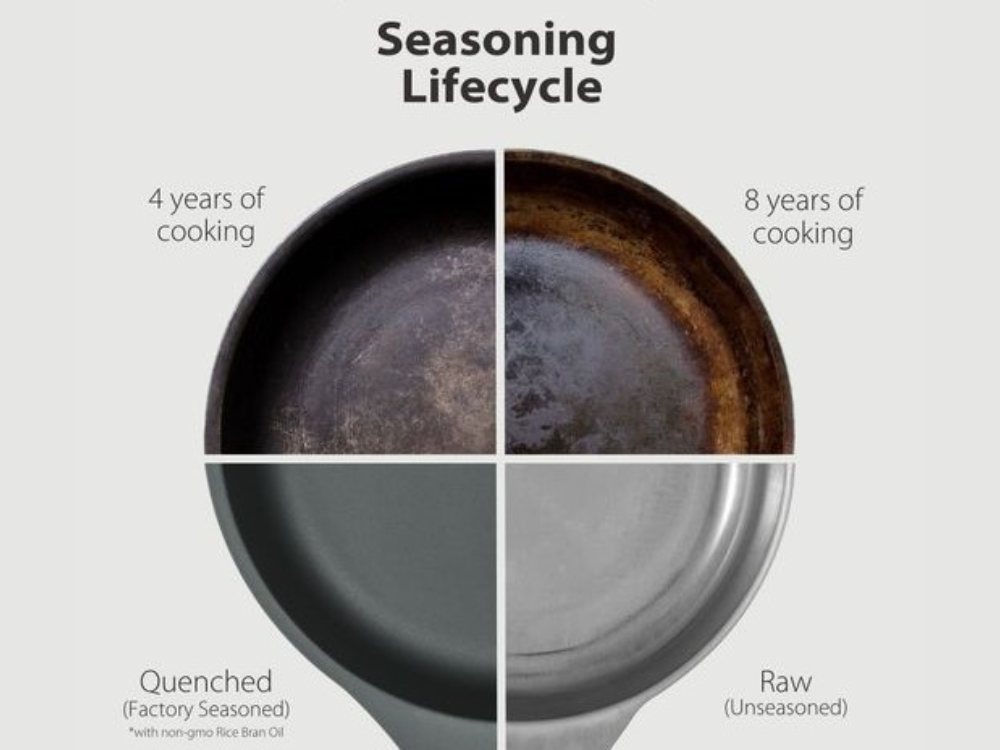
Before we go through the seasoning process step by step, let's talk about what Seasoning actually is on a chemical level - When exposed to high heat, long chains of fat molecules break down into short-chain polymers that bond with naturally occurring carbon and bare iron, forming a type of glaze - patina. This is the seasoning that guarantees smooth, non-stick properties similar to Teflon. Thanks to this glaze, a natural barrier is formed between the air and the bare iron in your pan, acting as the first line of defense against rust.

If you put cast iron under a microscope, you’ll see that its surface is uneven and porous, and these unevenness and pores expand as the pan heats up. Grease, especially in the early stages of a pan, is sealed directly into the iron, filling in the pores and smoothing everything out to an even surface. Over time, as layer after layer of grease builds up, the cooking surface eventually becomes a clean layer that is firmly bonded to the iron underneath.
1. Clean Your Pan Before Greasing
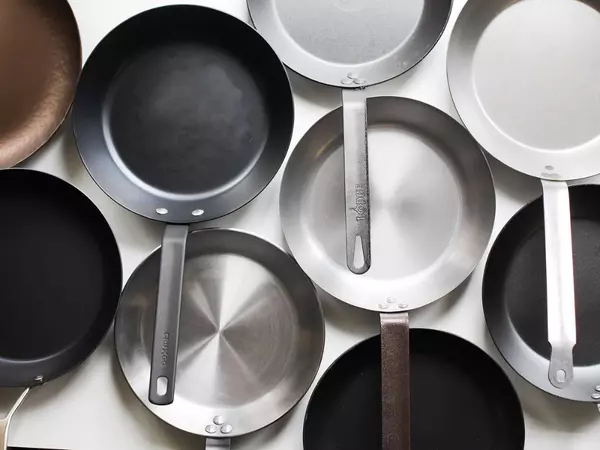
Most carbon steel pans come ungreased, with a protective coating that ensures the bare metal won’t rust. How can you tell if your pan isn’t greased? It will be a metallic gray color, not black like most standard cast iron pans.
- Wash it with hot water and mild soap to remove any factory coating or built-up residue.
- Dry thoroughly with a towel.
:max_bytes(150000):strip_icc()/__opt__aboutcom__coeus__resources__content_migration__serious_eats__seriouseats.com__images__2016__09__20160817-cast-iron-pan-vicky-wasik-1-2-5ca3f25cf17a4a6aa97f4a8c878c63b3.jpg)
:max_bytes(150000):strip_icc():format(webp)/__opt__aboutcom__coeus__resources__content_migration__serious_eats__seriouseats.com__images__2016__09__20160817-cast-iron-pan-vicky-wasik-7-d96df95cf6b34fcd9dee615194ad181f.jpg)
2. Apply a thin layer of fat
It’s time to apply the first layer of fat and it’s helpful to heat the pan first so that the oil can spread as thinly as possible. You can use a stovetop to make it easier, but you can also do it in an oven at 230°C, as long as the handle of your carbon steel pan is oven-safe (unlike cast iron pans, which are a solid piece of iron, along with the handle, carbon steel has a riveted handle; some carbon steel pan handles do not withstand high oven temperatures, so check the instruction manual).
- Heat the pan on the stovetop for about 5 minutes to evaporate any residual moisture.
- Use oils with a high heat coefficient, such as rapeseed, grapeseed or sunflower oil.
* Do not use: lard and fat; butter, which has water and milk solids mixed in; olive oil, which is more expensive and often has sediment; or linseed oil, which has a tendency to flake.
- Season the entire surface (inside and out) evenly using a paper towel or cotton cloth. Make sure there is no excess grease! It is important that the pan looks dry with a matte finish after greasing!

3. Heat the pan
- Oven method: Preheat the oven to 200-250°C (400-480°F) and place the pan, bottom side up, on the middle rack. Bake for 1 hour. After one hour, turn off the heat and let the pan set in the oven for another hour before opening the door.
:max_bytes(150000):strip_icc()/__opt__aboutcom__coeus__resources__content_migration__serious_eats__seriouseats.com__images__2016__09__20160817-cast-iron-pan-vicky-wasik-10-1500x1125-eff41c54f43940998cf831760a9e6452.jpg)
Seasoning a pan once in the oven doesn’t mean it’s good for life. You can repeat this process a few times, but your best bet for a shiny patina is to simply cook with it. Once you have a strong base coat firmly attached to the pan, your job is to reinforce it with the ultra-thin layers that come from daily cooking. Dishes that use a lot of fat are a great way to build on your new “base coat.”
- Hob Method: Heat a pan over medium-high heat until the fat starts to smoke slightly. Let it cool.
:max_bytes(150000):strip_icc():format(webp)/__opt__aboutcom__coeus__resources__content_migration__serious_eats__seriouseats.com__2019__05__20190510-seasoning-carbon-steel-vicky-wasik-9-1500x1125-bcc157da20314562b804a51f535d4560.jpg)
:max_bytes(150000):strip_icc():format(webp)/__opt__aboutcom__coeus__resources__content_migration__serious_eats__seriouseats.com__2019__05__20190510-seasoning-carbon-steel-vicky-wasik-smoking-1500x1125-224db722ba0f46d3a363651fcb022290.jpg)
Let the oiled pan heat up, either on the burner at its highest setting or in the hot oven. The burner works well, but since carbon steel doesn’t conduct heat well, you may need to move the pan around to make sure the oil has polymerized everywhere. How can you tell? With new carbon steel, you can literally see it. The areas where the oil has hardened into a coating will have turned a pale brown hue. That’s greasing! Be careful, the pan will smoke heavily during this process, so open your windows, turn on your range hoods, and send your kids outside to play.
4. Repeat for a Better Coating
- For best results, repeat the process 2-3 times to build a durable nonstick coating.
- Continue to apply these micro-thin layers of oil and heat them until they darken, over and over again, until the pan is at least a dark brown. This should be enough greasing to start cooking.
:max_bytes(150000):strip_icc():format(webp)/__opt__aboutcom__coeus__resources__content_migration__serious_eats__seriouseats.com__2019__05__20190515-carbon-steel-seasoning-progression-1500x1125-7f30ccb479f34304843279b34bc4f71f.jpg)
Maintenance after greasing
- Avoid harsh detergents; clean with warm water and a soft brush.
- After cleaning, apply a thin layer of grease to maintain the protective layer.
- Store in a dry place to prevent moisture and rust.
Why is greasing important?
- Prevents food from sticking.
- Protects the pan from oxidation and corrosion.
- Improves the taste of food over time, especially in cast iron pans.
- Extends the life of the pan.
Seasoning turns iron and steel into premium cookware that gets better with use.
Final tips for professional care
Whether you are a professional chef or an amateur, proper care for your pans guarantees not only excellent culinary results, but also long-term savings. Follow these golden rules:
- Know the material: Each type of pan has its own requirements – treat it according to its specifics.
- Use the right utensils: Avoid metal on sensitive surfaces.
- Adjust the temperature: Excessive heat damages both the pan and the food.
- Maintain regularly: It’s better to clean immediately after use, but always when the pan is cool, rather than leaving dried-on residue.
- Seasoning wisely: Creating a patina on cast iron and iron is not a hassle – it’s an investment in your kitchen.
Grease and patina – come with time and use
- Cook with fatty foods and be generous with butter and cooking oil - A few tablespoons of butter or a large knob of butter will keep everything well-lubricated while frying or sautéing in a pan. (Don’t be afraid to add more!) While some oils are better than others, you can use any fat you like while cooking.
- Keep the heat low - In the early stages of a pre-oiled pan, even one you oiled yourself, your food may stick a little. Keep the heat low or medium while you build up the initial layers.
- Avoid acidic and long-cooked foods (at first) - Tomatoes, wine, citrus fruits, and vinegar can eat away at built-up layers of fat, so keep tomato sauce away and avoid deglazing in the beginning. A lightly oiled cast iron pan can even add unpleasant iron flavors to acidic foods.
Ready to choose your next pan?
Now you know how to care for cast iron, iron, aluminum, and stainless steel cookware. The next step is to choose a pan that suits not only your cooking style, but also your rhythm and style in the kitchen.
In our selection at Tirol Professional you will find:
- Professional 18/10 stainless steel pans – for restaurants and gourmet experiences
- Iron and cast iron pans – for traditional cooking and irreplaceable taste
- Aluminum pans with non-stick coating – for light cooking and quick preparation
Explore our collection and choose a pan that will withstand time, temperature and everything in between!
Not sure how to maintain the different materials of your cookware? Start with part 2 of our series, where we look at professional care for stainless steel, cast iron, iron and aluminum.
This post is Part 3 of the "Secrets of Pans" series.
Read more:
- Part 1: How to choose the right frying pan
- Part 2: How to maintain your pans like a chef
© Copyright on texts and images
Part of the content and visual materials in this article are adapted from:
- Serious Eats – "How to Season Carbon Steel Pans"
- Field Company – "How to Season a Cast Iron Pan"
All rights to the original texts and images belong to the respective authors and publishers.
This publication is for informational and educational purposes.
Adaptation and editing: Tirol.bg